
Boost Your Dog's Spring Allergy Relief with Optimal Nutrition
Each spring brings a familiar pattern for many dog owners. Their beloved pets begin to scratch excessively, lick their paws incessantly, and shake their heads repeatedly. Owners often attribute these behaviors to the inevitable pollen surge and simply hope it subsides on its own. In some cases, the
Each spring brings a familiar pattern for many dog owners. Their beloved pets begin to scratch excessively, lick their paws incessantly, and shake their heads repeatedly. Owners often attribute these behaviors to the inevitable pollen surge and simply hope it subsides on its own. In some cases, the symptoms do fade away naturally. In others, they persist much longer than expected. This inconsistency deserves closer examination and attention from pet parents.
Environmental allergens during seasonal changes truly impact a significant number of dogs. However, a frequently underappreciated aspect is how a dog's daily diet profoundly influences the intensity of their immune system's reaction to these airborne triggers. Emerging scientific research highlights this vital link, offering actionable strategies that responsible pet owners can implement to support their dogs' well-being.

What Seasonal Allergies Manifest as in Canines
It's essential to understand from the outset that dogs exhibit seasonal allergies in ways that differ markedly from human experiences. Humans typically respond with sneezing and turn to over-the-counter antihistamines for relief. Dogs, on the other hand, primarily manifest their discomfort through intense itching. This itching concentrates in areas with thinner skin and greater exposure to allergens, such as the paws, ears, and abdomen. The most prevalent indicators include:
- Constant scratching, particularly targeting the paws, face, and underarm regions
- Visible redness or inflammation on the belly or in the spaces between toes
- Frequent ear infections accompanied by that distinctive yeasty odor
- Obsessive licking or chewing at specific areas repeatedly
- Development of hot spots that appear suddenly and refuse to heal quickly
Unlike humans, dogs seldom experience runny noses or explosive sneezing episodes triggered by seasonal allergens. Instead, their reactions predominantly affect the skin or gastrointestinal tract.
The medical condition known as canine atopic dermatitis, which refers to allergic skin disease caused by environmental factors, impacts between 3% and 15% of dogs, with rates continuing to climb. A 2024 study in Veterinary Medicine: Research and Reports characterizes it as a complex, multifactorial disorder influenced by genetics, immune system imbalances, impaired skin barriers, and external environmental provocations. Common offenders in spring include pollen grains, grass particles, mold spores, and dust mites.
The core problem lies not in the allergens themselves but in the exaggerated immune response they provoke. This hypersensitivity can be modulated by various elements, including the nutritional composition of the dog's regular meals.

The Integral Role of Nutrition in Allergy Management
A dog's nutritional intake is inextricably linked to their overall immune function. These two aspects cannot be considered in isolation; they reinforce one another profoundly.
A meticulously designed randomized crossover clinical trial, featured in Frontiers in Veterinary Science in 2022, evaluated healthy dogs fed either a whole food-based diet or a traditional extruded kibble over two 67-day periods. The results revealed striking differences in inflammatory biomarkers among the whole food group, notably reduced ratios of TNF-alpha to IL-10, which indicates a healthier equilibrium between pro-inflammatory and anti-inflammatory pathways. The study's authors posited that whole food diets possess potential immunomodulatory properties in canines and advocated for expanded research involving dogs already suffering from inflammatory conditions.
Translating this into everyday terms: the consistent daily nourishment a dog receives directly shapes the foundational tone of their immune system. Pets whose diets promote reduced levels of ongoing inflammation tend to exhibit more measured responses to seasonal allergens. Conversely, those burdened by diet-induced inflammatory signals may descend into full-blown symptoms more readily during high-pollen periods.
The underlying biology is relatively uncomplicated. The skin serves as one of the body's primary immune interfaces. Inadequate nutrient uptake weakens the skin's protective barrier, diminishing its capacity to block allergens while retaining essential moisture. Enhanced digestibility ensures that vital nutrients are effectively delivered to key cells, including those tasked with upholding skin integrity and modulating immune activities.
Understanding Food Allergies Versus Sensitivities in Dogs
These two concepts are frequently conflated in casual conversation, yet they represent distinct physiological phenomena.
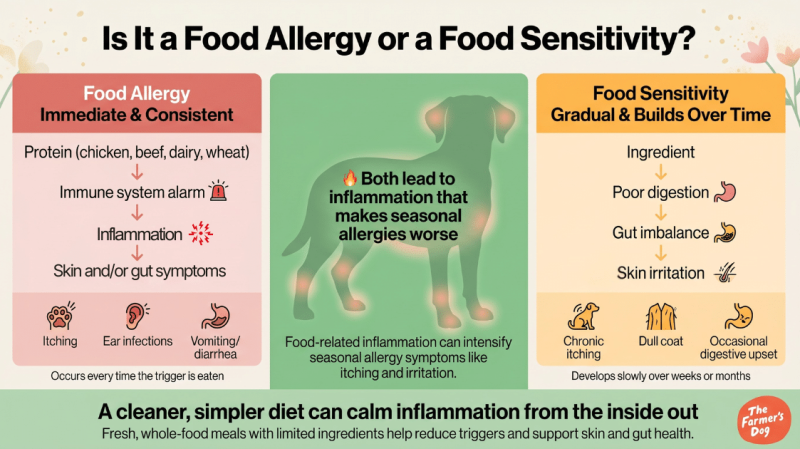
True food allergies involve a robust IgE-mediated immune reaction. The body mistakenly perceives a particular protein—commonly found in chicken, beef, dairy products, or wheat—as a dangerous invader and launches a targeted assault. Symptoms remain predictable and consistent, often presenting as dermatological problems, gastrointestinal disturbances, or a combination thereof.
Food sensitivities, by contrast, operate on a milder level without triggering a complete immune cascade. The digestive tract simply struggles to process certain components efficiently, with secondary effects often surfacing on the skin. Such sensitivities can accumulate subtly over extended periods of repeated exposure before becoming apparent.
Either scenario can exacerbate chronic skin inflammation, thereby amplifying the severity of springtime allergic flare-ups.
A comprehensive 2022 investigation in the Journal of Veterinary Internal Medicine tracked more than 4,000 dogs and identified correlations between dietary patterns in early puppyhood and the emergence of allergic skin manifestations in adulthood. Puppies raised on non-processed diets demonstrated a notably lower incidence of such skin allergy indicators compared to peers subsisting on standard processed feeds. This finding bolsters an expanding evidence base connecting dietary excellence to enduring immune resilience and dermal vitality.
Indicators That Diet Could Be Contributing to Symptoms
Classic seasonal allergies intensify during spring and autumn, then abate over winter months. Reactions tied to diet, however, maintain a steady presence throughout the calendar year.
Key observations that point toward a dietary influence include:
- Skin itching, irritation, or ear troubles that linger even after pollen counts drop
- Persistent ear infections that recur despite medical interventions
- Gastrointestinal complaints co-occurring with dermatological signs, such as soft stools, erratic bowel movements, or heightened flatulence
- Limited progress despite rigorous control of environmental factors like frequent bedding washes, reduced outdoor exposure, and meticulous paw cleansing
Individually, these signs lack conclusiveness. Yet, when multiple align in one dog, they warrant a veterinary consultation and a thorough audit of the current feeding regimen.
Veterinary-Recommended Elimination Diets Explained
When a veterinarian identifies potential food-related triggers, an elimination diet often serves as the initial diagnostic and therapeutic step. This methodical protocol entails providing a streamlined, limited-ingredient ration exclusively for 8 to 12 weeks, followed by controlled reintroduction of singular proteins to pinpoint provocateurs.
Success hinges on unwavering adherence. Traces of prohibited elements can invalidate the entire effort. The protocol proves most effective when the foundational diet boasts sufficient simplicity to function as an untainted baseline.
Beyond formal trials, a universal principle emerges: opting for less processed, ingredient-minimal foods facilitates precise comprehension of dietary impacts and individual tolerances. This transparency proves invaluable for proactive pet care.
Common Improvements Reported by Dog Owners
Individual responses to dietary shifts differ widely, as nutrition represents just one piece of a multifaceted puzzle. Nonetheless, pet guardians frequently observe the following after transitioning to fresh, whole-component meals:
- Glossier, more supple coats accompanied by reduced shedding
- Diminished scratching behaviors and paw licking over progressive weeks
- Steadier, more predictable digestion
- Elevated vitality levels and enhanced overall ease
These transformations unfold gradually rather than instantaneously. Dermal and coat conditions mirror cumulative nutritional history spanning months, not mere days. For instances where prior feeding habits covertly fueled issues, excising those elements yields tangible, sustained benefits.
Variability in outcomes remains the norm. Dogs enduring chronic dermatological challenges should always seek professional veterinary guidance.

Comprehensive Strategies for Navigating Allergy Seasons
Incorporating fresh nutrition does not supplant established allergy protocols; rather, it establishes a robust underpinning for them.
An effective, holistic springtime regimen integrates multiple proactive measures:
- Superior Nutrition: Highly digestible, whole-ingredient formulations that bolster dermal integrity and immune equilibrium
- Routine Hygiene Practices: Frequent bathing sessions and post-outdoor paw wipes to minimize allergen accumulation on fur
- Home Environment Controls: Weekly bedding laundering, consistent vacuuming, and curtailed outings during peak pollen forecasts to curb overall exposure
- Professional Veterinary Interventions: For pronounced or intractable cases, options like antihistamine prescriptions, therapeutic shampoos, or diagnostic allergy panels
No isolated tactic suffices independently. The overarching objective involves systematically diminishing the cumulative allergen load across all vectors, thereby easing the immune system's relentless demands.
Key Takeaways on Diet and Canine Allergies
Spring allergies pose genuine challenges for dogs, evoking frustration among their human companions. Fortunately, they need not remain wholly unmanageable.
While nutrition alone cannot eradicate allergies, it constitutes a pivotal, adjustable factor. Dogs nourished with rations that authentically nurture skin resilience, digestive efficiency, and immune poise stand far better prepared to weather seasonal onslaughts. Contemporary studies increasingly affirm this connection with compelling data.
Embracing fresh, authentic ingredients in measured portions with straightforward, identifiable components transcends indulgence—it's the gold standard for optimal canine thriving.
Frequently Asked Questions on Canine Diets and Allergies
Q: Does a dog's diet influence seasonal allergy manifestations?
Diet does not directly provoke environmental allergies like those from pollen, which drive spring symptoms. That said, scientific inquiries demonstrate that nutritional quality modulates immune reactivity intensity. Dogs receiving highly absorbable, whole-food sustenance often manage allergen encounters with greater composure than those plagued by diet-fueled chronic inflammation.
Q: How can I differentiate food allergies from seasonal ones in my dog?
Seasonal patterns provide the primary diagnostic hint. Environmental allergies peak in spring and fall, receding in winter. Dietary issues endure consistently across seasons. Non-seasonal persistence, coupled with recurrent ear woes or gut disturbances beside skin symptoms, merits a veterinary-directed food elimination trial.
Q: What types of food are best for allergic dogs?
Commence with your veterinarian for any pup displaying notable allergy signs. Broadly speaking, diets emphasizing simplicity, superior digestibility, and minimal ingredients streamline trigger detection and evasion. Fresh, gently processed options lend themselves to easier scrutiny than kibble laden with extensive additive rosters.
Q: Can switching to a fresh food diet alleviate allergy symptoms?
Such diets are not positioned as cures nor veterinary substitutes. They deliver fresh, whole-ingredient nutrition that's exceptionally digestible, transparent, and crafted under veterinary nutritionist oversight. Where dietary shortcomings undermine skin vitality, this foundational upgrade can yield substantial gains. Individual results fluctuate.
Q: What timeline should I expect for noticing dietary improvements?
Dermal and coat evolutions demand patience, typically 6 to 8 weeks minimum for substantive shifts, given the leisurely turnover of skin cells. Gut enhancements may materialize sooner. Steadfast commitment proves crucial; erratic changes obscure true efficacy.
Enhancing Allergy Season Support Through Informed Feeding
Although pollen and ambient irritants evade direct mastery, elevating dietary standards lies squarely within your purview. Adopting a fresh, whole-food paradigm fosters fortified immune reactions, fortified skin defenses, and amplified comfort amid allergy peaks.
For dogs beleaguered by annual spring ordeals or perpetual skin and digestive quandaries, reevaluating bowl contents merits serious consideration. Prioritizing nutritional excellence often precipitates profound, lasting enhancements.
Weekly Digest
Top articles delivered to your inbox every week.