
Canine Autoimmune Skin Disorders: Vet Expert Guide
When a dog's immune system erroneously targets its own skin cells, it leads to autoimmune skin diseases in canines. Integrative veterinarian Dr. Julie Buzby provides an in-depth overview of these conditions in dogs, covering the fundamental aspects, breeds at higher risk, clinical manifestations, th
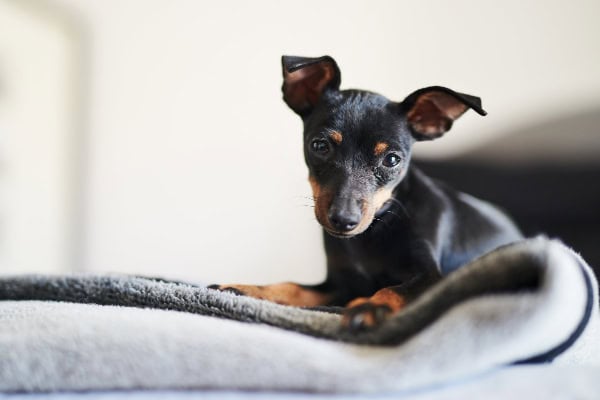
When a dog's immune system erroneously targets its own skin cells, it leads to autoimmune skin diseases in canines. Integrative veterinarian Dr. Julie Buzby provides an in-depth overview of these conditions in dogs, covering the fundamental aspects, breeds at higher risk, clinical manifestations, therapeutic approaches, and expected outcomes for six distinct types of dog autoimmune skin disorders.
You might have taken your dog to the veterinarian expecting a straightforward diagnosis like a minor skin infection, a scraped nose, or a torn toenail, only to receive a preliminary identification of an autoimmune skin condition. This can feel overwhelming and unfamiliar, but gaining knowledge about these autoimmune skin issues in dogs equips you to better support your beloved pet through the journey.
Understanding Autoimmune Skin Conditions in Dogs
Autoimmune skin diseases in dogs represent a broad category of disorders where the body's immune system incorrectly identifies healthy skin cells as invaders and launches an attack against them. The specific impacts vary by condition but can manifest as alterations in skin color, nail shedding, painful lesions, blister formation, alopecia, or persistent wounds that refuse to heal properly.
Factors Triggering Autoimmune Skin Diseases in Canines
In certain instances, no clear trigger can be pinpointed for the development of an autoimmune skin disorder in dogs. Conversely, elements such as inherited susceptibility, recent immunizations, contact with specific toxins like pesticides, environmental pressures including allergens and pollutants, or infections from bacteria or viruses can initiate the misguided immune reaction.
Regarding Vaccinations: Vaccinations play a crucial role in enabling a dog's immune system to combat life-threatening illnesses. Although exceedingly uncommon, this immune activation might, in rare scenarios—particularly for dogs with existing vulnerabilities—precipitate autoimmune issues. Nevertheless, for the vast majority of dogs, the protective advantages of vaccines significantly surpass any potential drawbacks. Your veterinarian will tailor vaccination recommendations to your dog's individual health background and daily routine.
Veterinary Diagnostic Process for Autoimmune Skin Diseases
Diagnosing autoimmune skin diseases in dogs presents challenges due to symptom overlap with numerous other health issues. The process typically combines exclusion of mimicking conditions with definitive skin biopsy procedures to verify the presence of an autoimmune skin disorder.
Initial Tests to Exclude Alternative Diagnoses
Veterinarians conduct a series of examinations to eliminate prevalent parasitic, bacterial, fungal infections, and specific malignancies. Additionally, they might suggest evaluations for underlying systemic illnesses that produce skin-related signs. These could encompass:
- Skin Scrapings: These help exclude parasites responsible for conditions like demodectic mange caused by Demodex or sarcoptic mange from scabies mites.
- Cytology Analysis: This examines for yeast, bacterial, or fungal elements indicative of infections, along with particular blood cells such as lymphocytes that could signal inflammation or cancers like epitheliotropic lymphoma.
- Hair Shaft Microscopy (Trichology): This detects parasites or fungal elements on the hair, determines hair growth stages, and spots fractured shafts suggesting excessive scratching or chewing behaviors.
- Comprehensive Blood Panels: These identify endocrine disruptions such as hypothyroidism or Cushing's disease, both of which can profoundly impact skin health.
Should these investigations fail to uncover the root of the skin abnormalities, or if skin issues persist post-infection treatment, suspicion for an autoimmune etiology intensifies considerably.
Confirmatory Skin Biopsy Procedures
To conclusively identify an autoimmune skin disease, a skin biopsy remains the definitive method. This involves surgically excising small samples from affected regions.
The biopsy technique may differ slightly based on the anatomical location, but vets often prefer sampling multiple sites to maximize diagnostic accuracy. Under general anesthesia, several minute skin sections are harvested and forwarded to a specialized laboratory. A veterinary dermatopathologist—a specialist in skin tissue analysis—then scrutinizes the cellular structure and epidermal layers.
The pathologist searches for irregular cells near hair follicles, including inflammatory infiltrates and neoplastic cells. They also assess broader architectural modifications in the skin. Integrating the patient's clinical history with biopsy findings, the dermatopathologist delivers a precise interpretation and diagnosis, which typically corresponds to one of six primary autoimmune skin diseases in dogs.
Six Key Autoimmune Skin Diseases Affecting Dogs
Various autoimmune disorders can target a dog's skin, nasal planum (composed of unique skin cells), and/or claws (derived from skin cell proliferation). Manifestations differ according to the targeted cells, with corresponding variations in management strategies and long-term forecasts.
1. Pemphigus Complex Disorders in Dogs
The pemphigus complex encompasses a spectrum of autoimmune diseases arising when the immune system assaults its own epidermal cells. Each variant within this group impacts the skin distinctly.
Pemphigus Foliaceus (PF)
Pemphigus foliaceus stands as the predominant autoimmune skin ailment in dogs. Beyond dermatological effects, delayed diagnosis can lead to profound systemic complications.
Breeds exhibiting heightened susceptibility to pemphigus foliaceus consist of:
- Akitas
- Chow Chows
- Cocker Spaniels
- Dachshunds
- English Bulldogs
- Labrador Retrievers
That said, pemphigus foliaceus can strike other breeds and even felines.
Initial presentations in dogs with pemphigus foliaceus feature prominent blisters and eroded skin patches around the muzzle and pinnae. Without prompt intervention, progression extends to paws, torso, and inguinal regions.
As vesicles rupture, they produce expansive erosions and ulcerations. Crust detachment concomitantly pulls away fur tufts, resulting in severely desquamating skin and multifocal alopecia.
Systemic ramifications encompass pyrexia, lethargy, anorexia, pruritus, and pododynia, especially with pedal involvement.
The prognosis for PF remains cautious, with recurrences possible despite protracted pharmacotherapy.
Pemphigus Erythematosus (PE)
Pemphigus erythematosus manifests as a less aggressive variant of pemphigus foliaceus. Lesions typically confine to erythema and crusting on auricles, face, and nasal planum, sparing the remainder of the integument. German Shepherds, Collies, and Shetland Sheepdogs predominate among affected individuals. Fortunately, PE responds favorably to therapy, yielding a positive outlook, albeit often necessitating perpetual management.
Auricular erythema and crusting can signal underlying autoimmune pathology.
Pemphigus Vegetans
Pemphigus vegetans qualifies as a scarce pemphigus subtype. Unlike counterparts producing ulcerations, it generates painless, verrucous proliferations on the epidermis. Lesions preferentially localize to the cranium, cervix, buccal mucosa, labia, preputial region, and perianal zone.
Pemphigus Vulgaris (PV)
Pemphigus vulgaris represents the gravest pemphigus iteration. Commencement frequently involves labial and ocular vicinities, with inexorable dissemination akin to foliaceus. Originating from profundal dermal strata, PV bullae rupture to engender excruciating erosions.
Owing to its virulence, pemphigus vulgaris portends an unfavorable prognosis.
Therapeutic Strategies for Pemphigus Complex
Managing pemphigus entails aggressive corticosteroid administration alongside adjunctive immunosuppressants to abate immunoreactivity and mitigate inflammation.
Therapeutic triumphs prove inconsistent, frequently undermined by pharmacotoxicities or refractory disease. Remission, even when attained, harbors relapse risks, often mandating indefinite pharmacovigilance.
In profoundly compromised patients—predominantly foliaceus or vulgaris variants—therapeutic recalcitrance or intolerable morbidity may precipitate humane euthanasia to preserve dignity.
2. Discoid Lupus Erythematosus (DLE) in Canines
Termed colloquially as nasal solar dermatitis or collie nose, discoid lupus erythematosus primarily assaults nasal integument. Ultraviolet overexposure incites dermal inflammation in the delicate nasal and rostral integument, posited as a cardinal etiology.
Collies, German Shepherds, Shetland Sheepdogs, and Siberian Huskies exhibit predilection.
Debut manifestations encompass nasal depigmentation, ulceration, textural aberrations from cobblestoning, and vascular compromise yielding hemorrhage. Advanced disease disseminates to periocular, labial, auricular, and sporadically genital integument.
Nasal hypopigmentation may herald autoimmune dermatosis.
DLE remediation deploys systemic/topical glucocorticoids for immunomodulation and anti-inflammatory effects. Cyclosporine or tacrolimus topicals similarly curtail autoreactivity. Tetracycline-doxycycline paired with niacinamide yields robust symptom abatement.
3. Symmetric Lupoid Onychodystrophy (SLO) in Dogs
Symmetric lupoid onychodystrophy constitutes a peculiar, infrequent autoimmune affliction singularly targeting ungual matrices and corium. Correlations exist with autoimmune thyroiditis, alongside heritable facets. Bearded Collies, German Shepherds, Gordon Setters, and Rottweilers demonstrate vulnerability.
SLO inaugurates insidiously, implicating solitary or duo nails initially. Ungues turn friable, fissurate, and avulse from substratum. Podal hyperlicking and claudication ensue. Ungual exfoliation predisposes septic sequelae, culminating in panpedal engagement.
Augmenting antecedent diagnostics, pedal radiography excludes osteomyelitis or phalangeal osteosarcoma.
SLO mitigation demands protracted, occasionally lifelong, pharmacotherapeutics. Tetracyclines conjoined with niacinamide and alpha-tocopherol inaugurate therapy. Omega-3 supplementation and pentoxifylline adjunctively benefit select cases. Refractory ungues may warrant onychectomy.
Precocious detection and vigorous intervention confer sanguine prognostication for SLO-afflicted dogs.
4. Uveodermatological Syndrome (UDS) in Dogs
Resembling Vogt-Koyanagi-Harada syndrome in humans, uveodermatological syndrome sporadically emerges via melanocytic autoaggression across ocular, dermal, and pigmented tissues. Juvenescence predominates susceptibility, with Akitas comprising circa 75% of caseloads.
Clinical Presentations
Ocular derangements antedate mucocutaneous stigmata:
- Insidious Blindness Progression: Collisions and visual deficits herald onset.
- Photophobia: Blepharospasm or bright light aversion.
- Ocularalgia and Uveitis: Nictitans protrusion, epiphora, blepharospasm.
- Corneal Opacification: Haze afflicts cornea/anterior segment.
- Intraocular Hemorrhage: Hyphema accumulation.
- Conjunctival/Scleral Injection: Hyperemia imbuing bloodshot visage.
- Iridic Metamorphosis: Hyperpigmentation, rubefaction, or chromatic shifts.
Dermatologically, bilaterally symmetric amelanosis afflicts orolabial, nasal, circumocular, and urogenital zones, often crustulent, ulcerative, and alopecic. Canine UDS spares neuroaxis, unlike conspecific human affliction.
Diagnostic Approach
UDS verification navigates symptomatic pleiotropy via breed/age heuristics, ophthalmic scrutiny, historicity, and lesional dermatopathology.
Management and Forecasting
Ocular topicals palliate uveitis; systemic prednisone-azathioprine tandem governs tegumental flares. Niacinamide adjuncts favorably.
Prognosis gradients hinge upon predominant symptomatology severity and therapeutic alacrity. Precocity optimizes visual/dermal restitution; fulminant or tardily addressed cases presage guarded-to-dismal trajectories.
5. Bullous Pemphigoid in Canines
Bullous pemphigoid infrequently manifests in dogs via subepidermal vesiculation. Scarce casuistry precludes robust breed associations, though Dachshunds, German Shepherds, and Collies feature prominently.
Immunologic assault engenders bullae/erosions concentrated rostrally, axillarly, inguinaly, aurally, and sporadically podally/ungually. Rapid vesiculation yields prevalent ulceration; pruritus/pododynia variably attend.
Glucocorticoids—systemic/topical—or immunosuppressants remediate. Indefinite regimens occasion; successful tapers documented. Photoprotection mitigates exacerbation.
6. Alopecia Areata in Dogs
Alopecia areata infrequently activates via bulbar proteolysis, precipitating circumscribed effluvia craniocervically and thoracically. Belgian Shepherds, Dachshunds, Dobermans, and Miniature Pinschers evince predilection.
Hallmarks embrace:
- Circumscript Alopecia: Craniocervical, auricular, pedal predilection; occasional vibrissal/ciliary loss.
- Hyperpigmented Denudation: Follicular inspissation darkens alopecic loci.
Apathognomonic nonpruritus discriminates from pruritic alopecias.
Immunosuppression (cyclosporine/prednisone) variably succeeds; spontaneous anagenesis within 6-12 months obviates necessity per select literature. Melatonin fosters cyclicity; neogenic pelage often achromic.
Collaborating with Your Veterinarian
As your dog's principal steward, vigilant surveillance for aberrant dermatoses or vitality shifts proves indispensable. Promptly engage veterinary expertise upon novel/worsening tegumental perturbations, partnering assiduously through diagnostic/therapeutic odysseys.
Apprehension attends discovery, yet precocious stewardship and sustained succor empower myriad autoimmune dermatopathy dogs to flourish joyously.
Weekly Digest
Top articles delivered to your inbox every week.