
Crufts 2026 Winner Sparks Health and Ethics Debate
The recent announcement of the Crufts 2026 Best in Show winner has left many in the dog-loving community reeling from yet another wave of disappointment and debate. Just as enthusiasts were beginning to recover from the earlier controversy at the Westminster Kennel Club, where a dog with docked tail
The recent announcement of the Crufts 2026 Best in Show winner has left many in the dog-loving community reeling from yet another wave of disappointment and debate. Just as enthusiasts were beginning to recover from the earlier controversy at the Westminster Kennel Club, where a dog with docked tail and cropped ears claimed top honors, this latest decision at one of the world's most esteemed canine events has reignited passionate discussions about breeding standards, health priorities, and judging criteria.
Over the past couple of years, Crufts had been making encouraging strides toward promoting healthier dog breeds. In 2025, a sleek and athletic Whippet took home the prestigious title, followed by the energetic and versatile Australian Shepherd in 2024. These choices signaled a positive shift, aligning with the event's recent implementation of more rigorous guidelines for breeds prone to hereditary health issues. However, that progress came to a jarring halt on March 8, 2026, when the top prize went to Sh Ch Vanitonia Soloist, affectionately known as Bruin, a Clumber Spaniel whose heavily hooded eyes raised immediate concerns about visual impairment and overall fitness.
While Bruin is clearly a beloved and well-cared-for companion, his victory has prompted widespread questioning of whether he truly represents the pinnacle of healthy breeding practices. Critics argue that rewarding dogs with extreme conformational traits undermines efforts to prioritize welfare over aesthetics in purebred lines.
A Storied Legacy Under Scrutiny
Crufts stands as arguably the most influential dog show on the planet, drawing over 22,000 canine participants across four intensive days of competition. The event celebrates excellence not only in conformation but also in disciplines such as grooming, agility trials, flyball, obedience demonstrations, and even showcases of dogs excelling in military and police roles. Founded in 1891 by Charles Cruft, a visionary salesman of dog biscuits who traveled the world, the show has long shaped global standards for canine exhibitions.
From its humble beginnings, Crufts has evolved into a multifaceted platform that positions itself as a progressive hub for dog owners and enthusiasts year-round. It emphasizes innovation and forward-thinking approaches to canine care and competition. This reputation made the 2026 outcome all the more shocking, as the winning breed is notoriously plagued by a suite of severe health challenges.
Clumber Spaniels frequently grapple with pronounced entropion, where the eyelids roll inward, causing painful corneal irritation, and ectropion, where they roll outward, exposing the eye to infections and injury. These ocular conditions are compounded by hip and elbow dysplasia, which lead to debilitating joint issues, intervertebral disc disease that threatens mobility, and a rare genetic disorder called pyruvate dehydrogenase phosphate 1 deficiency, or PDP1. This exercise intolerance condition affects roughly 20 percent of the breed and severely limits physical activity.
Bruin's triumph in the Gundog group adds a layer of irony to the proceedings. Gundogs were historically bred for their prowess in assisting hunters by locating and retrieving game through dense forests and open fields. Yet, the winner's profoundly hooded eyes— a hallmark of the breed—would likely hinder such functional tasks, prioritizing appearance over utility.
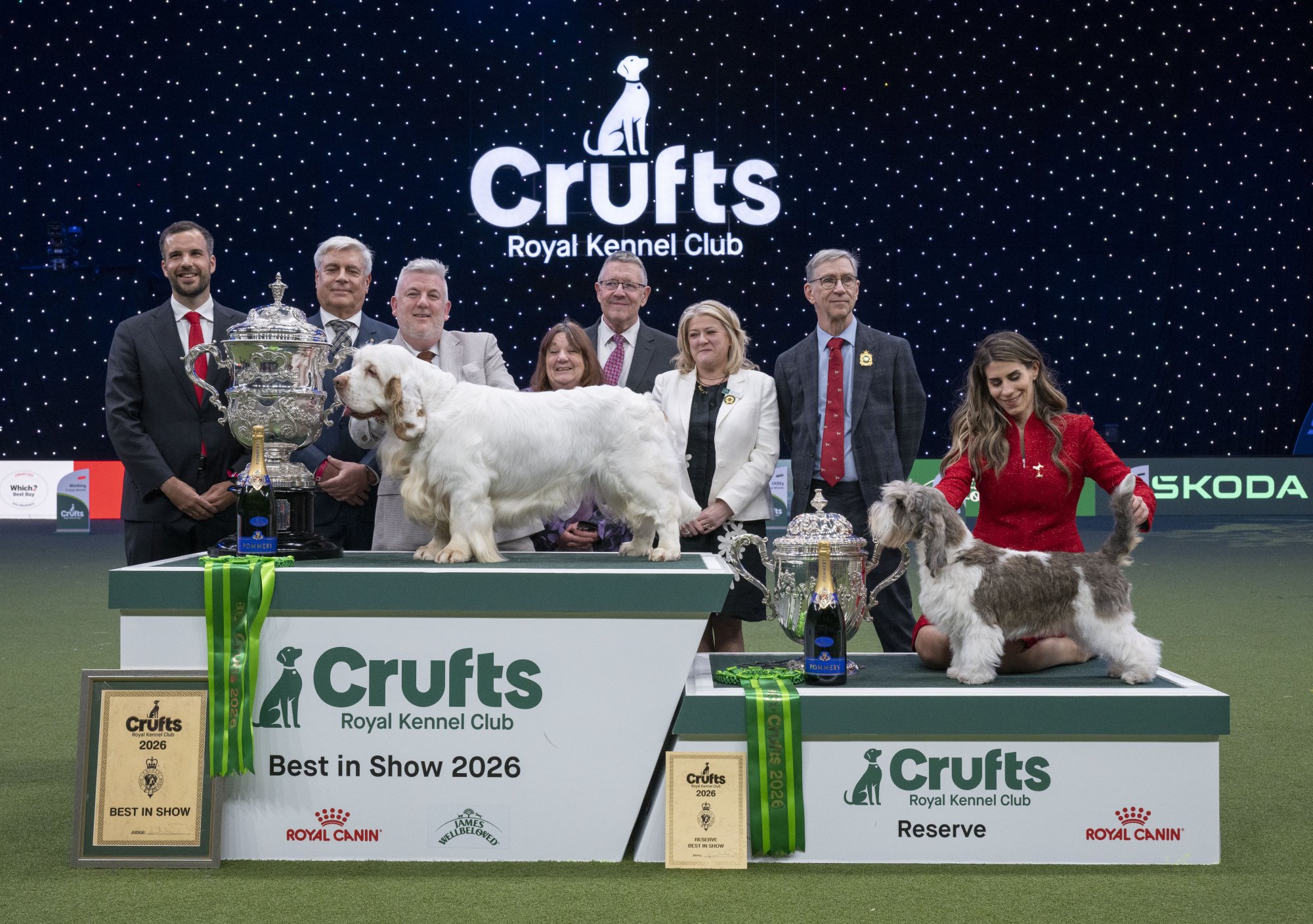
The photograph captures Lee Cox from Cambridge proudly holding Bruin, the Clumber Spaniel who secured the Best in Show title and the Keddell Memorial Trophy. Beside them stands Iva Raic from Drnis, Croatia, with Meghan, the Petit Basset Griffon Vendeen who earned reserve honors. Surrounding the group are key figures including James McGrath, General Manager of Royal Canin, Best in Show Judge Tamas Jakkel, Dee Carter-Hunt (Lee's mother), Tom Mather (RKC Director), Jannine Edgar (RKC Chief Executive), and Ian Seath (RKC Chairman). This moment, taken on the final day of Crufts 2026, symbolizes celebration for some but controversy for many. Credit: Royal Kennel Club/BeatMedia.
Structural Flaws and Reserve Winner Concerns
The Clumber Spaniel's body conformation features a disproportionately long back relative to its leg length, a trait that predisposes these dogs to chronic spinal pain, intervertebral disc herniations, and related mobility impairments. This same structural exaggeration was evident in the reserve Best in Show winner, the charming yet notably short-legged Petit Basset Griffon Vendeen named Am/Cro/Fin/Int Ch* Black Majesty Some Say, known to friends as Meghan. Observers were left pondering the judges' preferences, which seemed to favor breeds inherently vulnerable to heightened risks of discomfort and health complications over those exemplifying robust functionality.
Owner's Past Adds Fuel to the Fire
The controversy escalated dramatically with revelations about Bruin's owner, Lee Cox, a seasoned breeder from Somerset in the UK. In 2001, Cox was convicted of animal cruelty for inflicting unnecessary suffering on a breeding spaniel through chronic neglect. The dog's ear infection had progressed to such a severe state that surgical amputation was required. Although authorities described the incident as isolated and it occurred over two decades ago, animal welfare advocates argue that such a history should have barred him from participating in Crufts and continuing to breed dogs.
This backdrop intensifies calls for stricter vetting processes for entrants and owners at major shows. Many question how someone with a documented record of neglect could represent the pinnacle of canine excellence on such a global stage.
A Missed Opportunity for Positive Change
Crufts 2026 featured an abundance of remarkably fit, agile, and skilled dogs across its various categories, showcasing the diversity and talent within the canine world. It is regrettable that the ultimate accolade went to a dog selected primarily for visual appeal rather than as an exemplar of sound, health-focused breeding. In an era where numerous countries have resorted to outright bans on breeds suffering from extreme genetic health burdens—such as those with severe brachycephaly, excessive skin folds, protruding eyes, or reproductive anomalies—the need for influential events like Crufts to champion moderate, functional traits has never been greater.
Imagine a future where prestigious platforms consistently highlight dogs free from the torments of rolled eyelids, elongated spines paired with stunted limbs, flattened muzzles that obstruct breathing, wrinkled skin prone to infections, bulging eyes susceptible to injury, or infertility stemming from conformational excesses. Such a shift would not only elevate welfare standards but also inspire breeders worldwide to prioritize health in their programs. Crufts, with its unparalleled reach and authority, holds the power to lead this transformation—yet the 2026 results suggest that more work remains.
Understanding Pedigree Titles
For those unfamiliar with show dog nomenclature, the prefixes and suffixes adorning a pedigree name typically denote achievements in conformation judging or affiliations with specific kennels. Terms like Champion (Ch), Show Champion (Sh Ch), or Grand Champion (GCh) signify competitive successes. Country-specific honors, such as American (Am), Croatian (Cro), Finnish (Fin), or International (Int) Champion, highlight accomplishments across borders, while kennel prefixes trace bloodline heritage. These markers celebrate structure and appearance but increasingly invite scrutiny when health implications arise.
Broader Implications for Dog Shows and Breeding
This latest Crufts decision echoes ongoing debates within the purebred dog community about balancing tradition with modern welfare science. Recent years have seen kennel clubs worldwide quietly expanding high-risk breed lists and tightening regulations, yet top-tier wins continue to spotlight specimens embodying outdated ideals. The juxtaposition of Bruin's hooded gaze and the Gundog category's functional heritage underscores a disconnect between a breed's historical purpose and its current show-ring form.
Similarly, the Petit Basset Griffon Vendeen's short legs—while endearing—mirror issues seen in other achondroplastic breeds, where skeletal disproportions lead to arthritis, back pain, and reduced lifespan. Judges' emphasis on these traits perpetuates breeding toward exaggeration, despite evidence of genetic testing and health screenings available to mitigate risks.
The owner's conviction history amplifies ethical concerns, prompting questions about accountability. Should shows implement lifetime bans for cruelty convictions? How can events enforce health certifications more rigorously? These incidents highlight the need for transparent judging rubrics that weigh functionality and longevity alongside beauty.
Looking Ahead: Hope for Reform
Despite the setbacks, glimmers of hope persist. Crufts' history of adaptation—from stricter guidelines to diverse category winners—suggests potential for course correction. Pet owners, veterinarians, and breed clubs are mobilizing, advocating for reforms that reward dogs capable of thriving in real-world scenarios, not just posing on the green carpet.
As discussions proliferate, the 2026 controversy may catalyze meaningful change, steering the dog show world toward a future where every Best in Show embodies vitality, not vulnerability. Until then, the canine community remains vigilant, championing health over hype.
Weekly Digest
Top articles delivered to your inbox every week.