
Dog Diet Impact: Weight, Joints & Longevity Explained
Numerous dog owners invest considerable effort into major aspects of pet care, such as scheduling veterinary visits, administering vaccinations, and selecting the appropriate collar dimensions. However, one critical element frequently receives insufficient focus, despite exerting a profound influenc
Numerous dog owners invest considerable effort into major aspects of pet care, such as scheduling veterinary visits, administering vaccinations, and selecting the appropriate collar dimensions. However, one critical element frequently receives insufficient focus, despite exerting a profound influence on a dog's enduring well-being, surpassing nearly all other factors.
That element is the content placed in the feeding bowl, consumed consistently each day. This encompasses not only the category of nourishment but also its suitability tailored precisely to your individual dog's age, current weight, exercise routine, and general state of health. These routine selections, repeated twice daily across the entirety of your pet's lifetime, subtly mold their body weight, the condition of their joints, and the overall duration of your shared companionship.
Scientific investigations into this topic reveal findings that are far more definitive than many pet owners might anticipate.

What Research Reveals About Canine Diet and Longevity
One of the most extensive investigations into canine lifespan involved monitoring Labrador Retrievers over a 14-year period, marking it as among the longest such studies in veterinary history. In this experiment, one group of dogs received standard feeding amounts, while the other group consumed 25% fewer calories, calibrated precisely to sustain an optimal, lean physique throughout their lives.
The dogs maintained on the reduced-calorie regimen achieved a median lifespan 1.8 years longer—equivalent to approximately a 15% extension—compared to those with unrestricted diets and higher body weights. Furthermore, these leaner dogs exhibited a delayed onset of osteoarthritis and a slower progression of various chronic conditions. This outcome translates to nearly two additional years of life, achieved not through pharmaceutical interventions or genetic advantages, but solely through strategic dietary management.
Such results represent a cornerstone of veterinary nutritional science, underscoring that a dog's body weight and the quality of their diet stand out as the most reliable indicators of longevity and graceful aging. Importantly, both factors lie fully within the control of dedicated pet owners.
Linking Excess Weight to Joint Health Challenges
Surplus body weight impacts far more than mere appearance; it fundamentally alters the daily physiological operations of a dog's entire system. The joints bear the initial brunt of this burden. Even a relatively small excess load amplifies the mechanical pressure on cartilage and surrounding connective tissues with each movement. Accumulated over months and years, this strain leads to irreversible wear.
Data from the AKC Canine Health Foundation indicates that close to 20 million dogs across the United States currently suffer from osteoarthritis, with overweight conditions identified as one of the most significant and adjustable contributing risks.
The consequences extend well beyond skeletal issues. Canines carrying extra pounds encounter elevated incidences of diabetes, cardiovascular disorders, breathing difficulties, and various cancers. Comprehensive analyses reveal that dogs classified at an obese body condition score enjoy an average lifespan of just 11.71 years, in stark contrast to the 13.18 years typical for those at ideal weights—a disparity exceeding one full year directly attributable to weight management.
A revelation that catches many off guard is the capacity for dogs to carry 10 to 15 percent above their optimal weight without displaying overt signs of heaviness. Dense fur coats and naturally robust frames often mask underlying issues. During routine veterinary examinations, professionals can accurately evaluate body condition, making it advisable to inquire about this assessment.

Insights from the Groundbreaking Cornell University Dog Food Research
While portion control plays a vital role, the composition of the food itself holds equal, if not greater, importance.
A pioneering year-long investigation by Cornell University researchers, in collaboration with certified veterinary nutrition experts, examined the internal physiological responses in dogs upon switching their diets. These results appeared in the esteemed peer-reviewed journal Metabolites in October 2025.
Senior canines transitioned from conventional kibble to fresh, gently prepared, human-quality meals demonstrated notable metabolic alterations within the initial 30 days. Key observations included:
- Significant reductions in advanced glycation end products (AGEs), molecules strongly associated with accelerated aging and persistent illnesses.
- Elevated concentrations of beneficial compounds such as ergothioneine and carnosine, which bolster antioxidant protections and promote optimal cellular function.
- Across-the-board enhancements in indicators of metabolic performance.
Dr. Joseph Wakshlag, a board-certified veterinary nutritionist holding DVM and Ph.D. credentials and co-author of the study, remarked, “The speed, durability, and extent of the metabolic changes we documented were remarkable. Transitioning to fresh, minimally processed nutrition redirected the dogs’ metabolic pathways toward profiles indicative of superior muscle maintenance and neurological vitality in aging animals.” These benefits persisted throughout the entire 12-month observation period, as detailed in Yamka et al. (2025), Metabolites, 15(10), 676.
This evidence illustrates that dietary quality transcends simple caloric balance; it influences the aging process at the cellular level, validated through rigorous, independent scientific scrutiny.

Understanding Common Challenges in Dog Feeding Practices
Instructions on standard dry food packaging provide broad recommendations suited to average dogs within specific weight categories. These lack customization for unique variables like age, breed specifics, daily activity, individual metabolism, or prevailing health concerns.
Consequently, adhering strictly to package directions might inadvertently deliver 10 to 20 percent more sustenance than your dog requires for optimal health.
Such subtle overprovisioning manifests gradually. A mildly heavy dog at age two may progress to pronounced obesity by age five, with emerging joint discomfort appearing around eight years old. Reversing entrenched issues at that stage proves considerably more challenging.
This scenario does not stem from negligence; rather, it reflects adherence to prevailing advice. The inherent limitation lies in the imprecision of generic guidelines for sustaining lifelong vitality, a shortfall addressed by precision-oriented nutrition solutions.
Practical Home Checks for Your Dog's Ideal Weight
Uncertain about your dog's current body composition? Between professional appointments, perform these straightforward evaluations:
- Ribs: They ought to be palpable with minimal pressure, yet not prominently visible.
- Waist: Viewed from overhead, a distinct taper should appear immediately following the rib area.
- Abdomen: From a lateral perspective, the underside should tuck upward toward the rear, avoiding a level or sagging profile.
Should any indicators suggest deviation, discuss with your veterinarian prior to alterations. Progressive, monitored adjustments surpass abrupt modifications in efficacy. Always consult a veterinary professional before substantially modifying your dog's nutritional regimen.
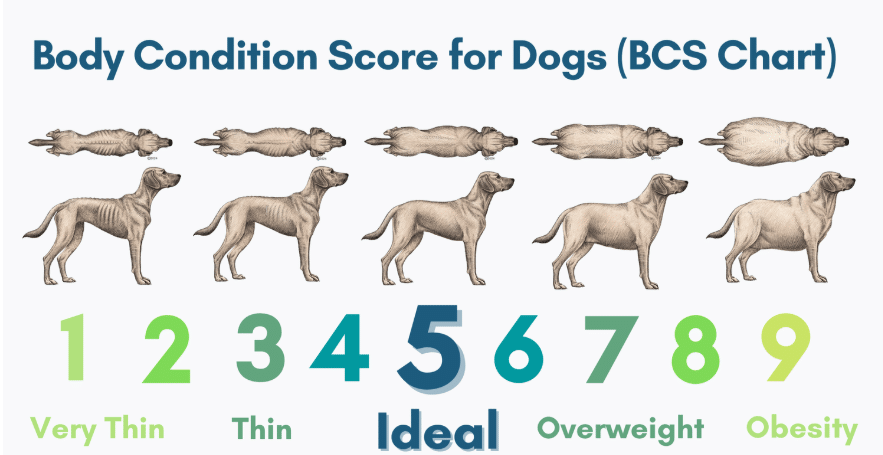
For an in-depth illustrative reference, consult the comprehensive 9-point body condition score chart from the Association for Pet Obesity Prevention, mirroring the diagnostic standard employed by veterinarians.
Holistic Perspectives on Canine Nutrition and Longevity
Each feeding occasion either bolsters your dog's prospective health or incrementally undermines it—not through overt drama, but via steady, cumulative effects across daily routines.
Empirical data aligns unequivocally: dogs preserved at lean weights and provided diets matched to their nutritional profiles exhibit extended lifespans, enhanced vitality, and postponed chronic ailment development. These conclusions derive from diverse, unbiased studies, free from commercial influence.
Comprehensive overhaul need not occur immediately. Awareness of the profound implications of habitual feeding decisions serves as an excellent foundation. Determining alignment between your dog's present diet and their precise requirements requires merely a couple of minutes.
Frequently Asked Questions on Dog Diet and Health
Q: To what extent does a dog's weight influence their lifespan?
Substantially, according to robust evidence. A seminal 14-year University of Pennsylvania study determined that dogs at lean weights outlived heavier peers by 1.8 years, with notably deferred emergence of conditions like osteoarthritis—yielding about a 15% lifespan extension through weight optimization alone.
Q: Does switching dog food genuinely promote longer life?
Superior diet quality correlates strongly with robust aging in canines. The 2025 Cornell University investigation documented tangible enhancements in aging-related metabolic indicators for dogs adopting fresh, human-grade nutrition within one month.
Q: How can I accurately determine feeding amounts for my dog?
Package suggestions offer initial guidance for typical dogs in weight brackets, but personalization elevates precision. Veterinary input provides tailored targets, while specialized services compute and pre-measure portions according to comprehensive individual profiles.
Q: What nutritional advantages distinguish fresh dog food?
Fresh, low-processing preparations preserve inherent nutrient densities from intact ingredients. Conventional kibble endures intense heat, potentially diminishing bioavailability. Cornell's metabolomics analysis confirmed divergent metabolic health trajectories between fresh-fed and kibble-fed dogs after 30 days.
Q: Is customized fresh food suitable for all dogs?
Formulated for every life stage with bespoke adjustments, it accommodates diverse profiles. As with major dietary shifts, veterinary clearance remains prudent, particularly for dogs with pre-existing conditions.
The Profound Impact of Daily Dietary Decisions on Canine Well-Being
Regarding sustained canine health, no choice recurs with greater frequency or consequence than the contents of their daily meals. Peer-reviewed research affirms that optimal weight maintenance paired with premium, appropriately formulated nutrition fosters extended lifespans, sustained activity levels, and mitigated chronic disease progression.
Incremental, purposeful selections accumulate meaningfully. Precision tailoring to individual necessities amplifies these benefits over time. Adopting a customized nutritional strategy can yield verifiable improvements in promoting internal health and vitality.
Weekly Digest
Top articles delivered to your inbox every week.