
Eli's Journey: From Dogfight Survivor to Loving Foster Star
Everyone recognizes the profound value of adopting animals directly from shelters, and how selecting a dog from a rescue facility can transform both your life and the animal's existence into something truly remarkable. Yet, there exists a crucial phase in the journey from rescue to permanent adoptio
Everyone recognizes the profound value of adopting animals directly from shelters, and how selecting a dog from a rescue facility can transform both your life and the animal's existence into something truly remarkable. Yet, there exists a crucial phase in the journey from rescue to permanent adoption that frequently escapes widespread attention: the fostering process. For numerous lucky canines, especially the young puppies, their stay within a shelter setting tends to be relatively brief. However, for many others, those initial weeks stretch into extended months or even prolonged years, significantly diminishing their prospects of securing a lifelong family. Despite the relentless dedication of shelter employees and dedicated volunteers who strive to fulfill every need of the animals under their protection, no institutional environment can truly replicate the warmth, security, and nurturing atmosphere of a genuine home setting—even if that home proves to be temporary rather than permanent. In the case of a dog named Eli, the intervention of a compassionate foster caregiver became the pivotal element that unlocked his path to adoption.
At a mere two years of age, Eli arrived at the Brevard SPCA, forming part of a heartbreaking group exceeding 150 dogs confiscated during a major federal investigation into dog fighting operations. Remarkably, Eli bore no visible physical injuries from his ordeal, but the deep psychological scars from his early life experiences were immediately apparent. He was so overwhelmed by fear that he refused to emerge from his crate, exhibiting profound terror in the presence of humans. Over several months, the committed team at Brevard SPCA—one among the thousands of shelters and rescue organizations collaborating with the prominent national animal welfare group, Best Friends Animal Society—devoted themselves tirelessly to Eli's rehabilitation. Through consistent patience and gentle interactions, they gradually demonstrated to him that humanity encompassed kindness and care, not solely cruelty. Eli did show incremental improvements, tentatively building trust with those around him in the shelter. Nevertheless, whenever introduced to prospective adopters, he would inevitably withdraw into a shell of anxiety and fear. This is when Makenna Carew stepped into the picture.
Makenna was no novice in the world of fostering; she had been providing temporary homes for cats and kittens for multiple years. Sharing her living space with her two resident dogs, Koa and Nova, along with her notably large cat named Loki, she had successfully prepared no fewer than a dozen felines for their eventual forever homes. Up until this point, however, she had never extended her fostering efforts to include dogs. Aware of the substantial daily time commitment required for canine care—particularly alongside her full-time employment—Makenna had strategically focused her volunteering on cats. That changed toward the close of 2025 when she found herself with some scheduled time off. Motivated by a clear purpose, she made her way to the local SPCA.
Prior to even entering the facility, Makenna had conducted her own research by checking the SPCA's website for their longest-term resident. These animals are often highlighted prominently on the page, and Eli caught her eye immediately. The description noted his uncertain compatibility with cats, which was particularly relevant since Makenna was caring for three foster cats at that moment, in addition to her own Loki.
Drawing confidence from her extensive fostering background and the notably easygoing temperaments of her own pets, Makenna believed her household could serve as the ideal environment to coax Eli out of his fearful state. By observing his interactions in a home setting with other animals, she could help showcase his genuine personality, thereby boosting his attractiveness to potential adopters. Eli had already endured nearly six months at the SPCA, and Makenna understood the urgency of giving him an opportunity to reveal his true self beyond the shelter walls.
Dogs often exhibit dramatically different behaviors once removed from the stressful confines of a shelter, she reasoned, and she was determined to offer Eli that vital chance. To ensure compatibility, she brought her own dogs for an initial meet-and-greet session, which proceeded exceptionally smoothly.
Eli's remarkable metamorphosis commenced almost instantly. Within mere hours of arriving in her home, and certainly by the end of just one or two days, he was already snuggling comfortably in bed, enthusiastically engaging in play with Koa and Nova, and reaching a pivotal milestone by affectionately serving as the big spoon to Loki in a heartwarming cuddle session.
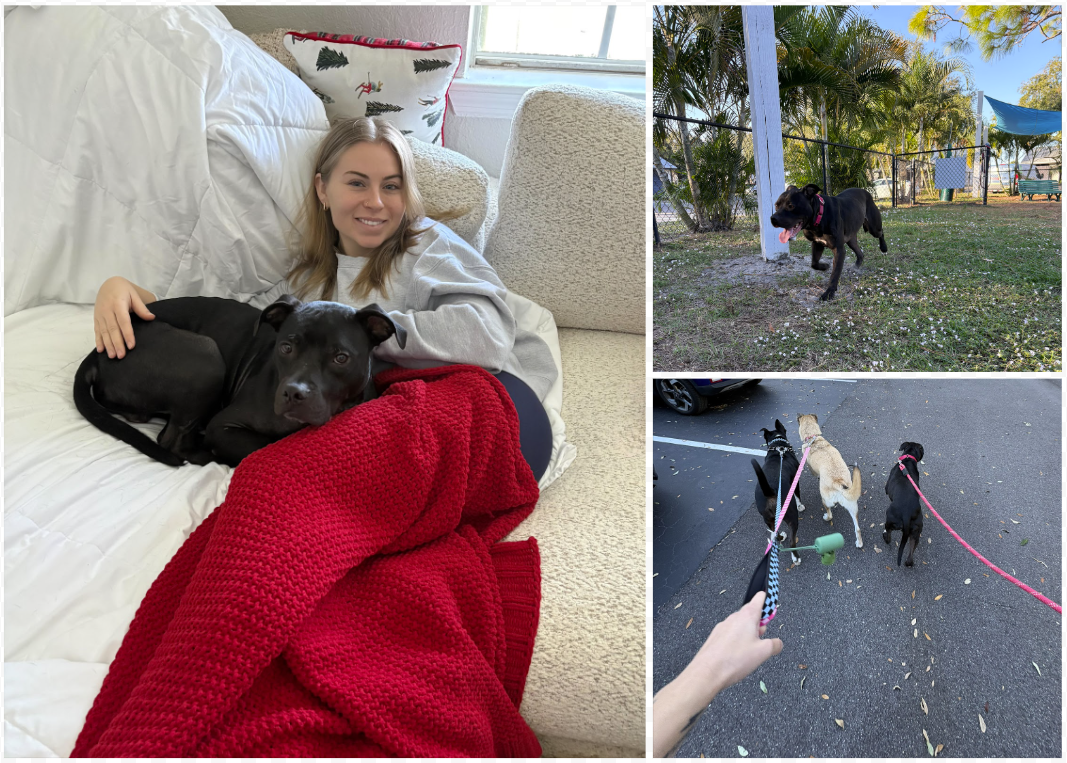
Compassionate foster caregivers such as Makenna provide essential opportunities for dogs like Eli to reveal their authentic selves and thrive in ways that shelter life simply cannot facilitate. By sharing a now-iconic photo capturing this tender moment on the SPCA of Brevard's Facebook page, Makenna unwittingly sparked a viral sensation. The post garnered thousands of likes, hundreds of heartfelt comments, and crucially, it captured the notice of Michael, a prospective adopter moved by Eli's poignant backstory.
Inspired by the narrative of Eli's hardships and budding recovery, Michael promptly contacted Makenna to organize a meeting. He brought along his housemate and their own dog for introductions, and from that encounter onward, events unfolded rapidly toward a happy resolution.
After languishing in fear for months within the shelter, Eli secured his forever home in a mere three days, all thanks to the nurturing environment provided by Makenna and her animal companions. Parting with him was undoubtedly emotional—Makenna confesses to shedding profound, audible tears—but she emphasizes that the reward far outweighs the temporary sorrow.
Eli's adoptive family has maintained ongoing communication with Makenna, recently sending her a delightful photo from his first birthday celebration in their care—which marked his third birthday overall. The image depicted him joyfully wearing a little party hat, a far cry from his former timid demeanor. He has blossomed remarkably, emerging fully from his shell, and Makenna expresses immense pride in the ideal match of his new owners. She considers this her greatest achievement of the year, filling her with unparalleled fulfillment.
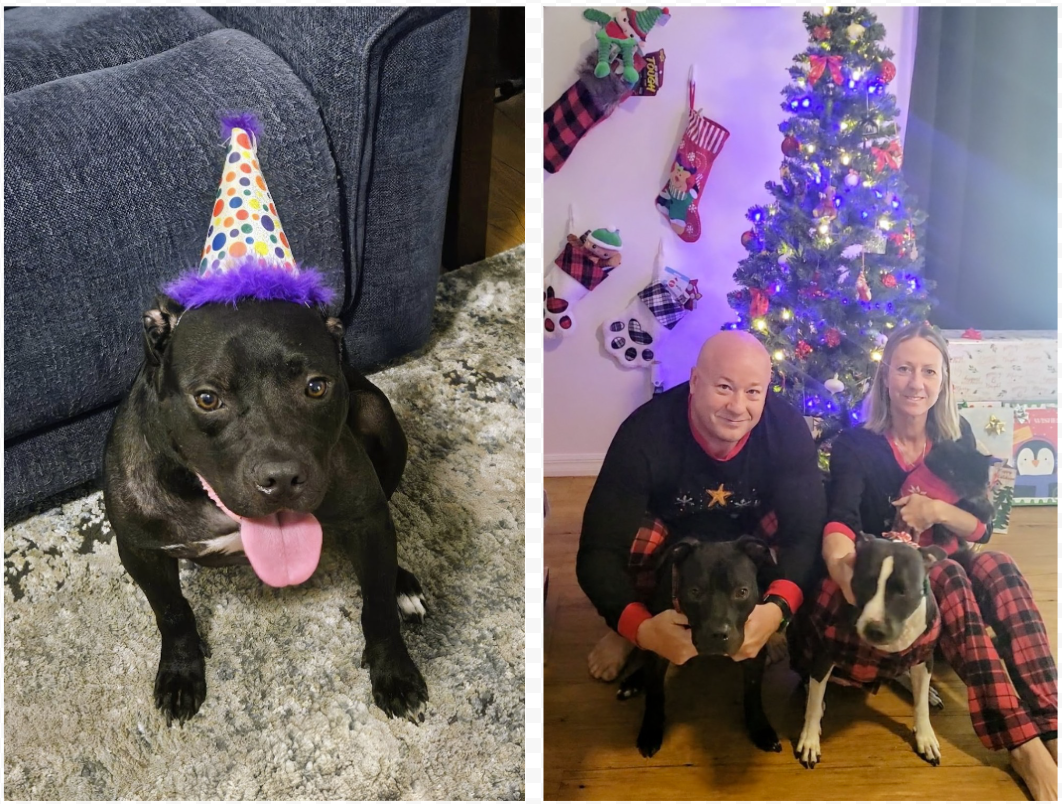
In slightly more than two months under his new roof, Eli has undergone a stunning evolution. His adopter, Michael, attributes much of this progress to the companionship of another rescue dog named Kelce, who has guided him in discovering the joys and norms of dog life.
A stable, predictable household routine has enabled Eli to unwind, decompress from past traumas, and embrace a genuine sense of safety for the first time. Michael recounts how Eli initially positioned himself cautiously in a corner near the couch, resting uncertainly on his bed with wary eyes. These days, however, he actively participates in family activities—gnawing contentedly on bones, romping playfully with his canine sister Kelce, or lounging peacefully at his human dad's feet. Evening park visits have become a cherished ritual, complemented by his enthusiasm for walks. Eli excels in interactions with other dogs and children alike, gradually unveiling a vibrant, loving personality brimming with character, playfulness, and unbridled joy. Michael and his family feel profoundly grateful to welcome Eli into their lives and eagerly anticipate witnessing his continued growth into the extraordinary dog he was always destined to become.
In an era where overwhelming global challenges in animal welfare can foster feelings of helplessness, stories like Eli's serve as powerful reminders that individual actions possess the capacity to create monumental change. One glance at Eli's transformed expression reveals the immense influence a single person can exert on a vulnerable life. Absent dedicated foster carers, innumerable dogs akin to Eli would remain hidden in shelters, their true potentials obscured by stress and fear. Data indicates that shelters implementing robust foster programs achieve approximately 30% higher adoption rates compared to those without, as fostering environments allow animals to exhibit their authentic behaviors while mitigating the development of stress-induced issues from extended kennel confinement. If you possess the capacity and desire to contribute—whether for a dog, cat, or other rescue animal—consider contacting your nearby shelter, rescue group, or organizations like Best Friends Animal Society to explore fostering opportunities.
Ultimately, fostering represents a direct lifeline for animals in need, and while the goodbyes may bring tears, the knowledge of lives forever altered makes every moment profoundly worthwhile.
Weekly Digest
Top articles delivered to your inbox every week.